
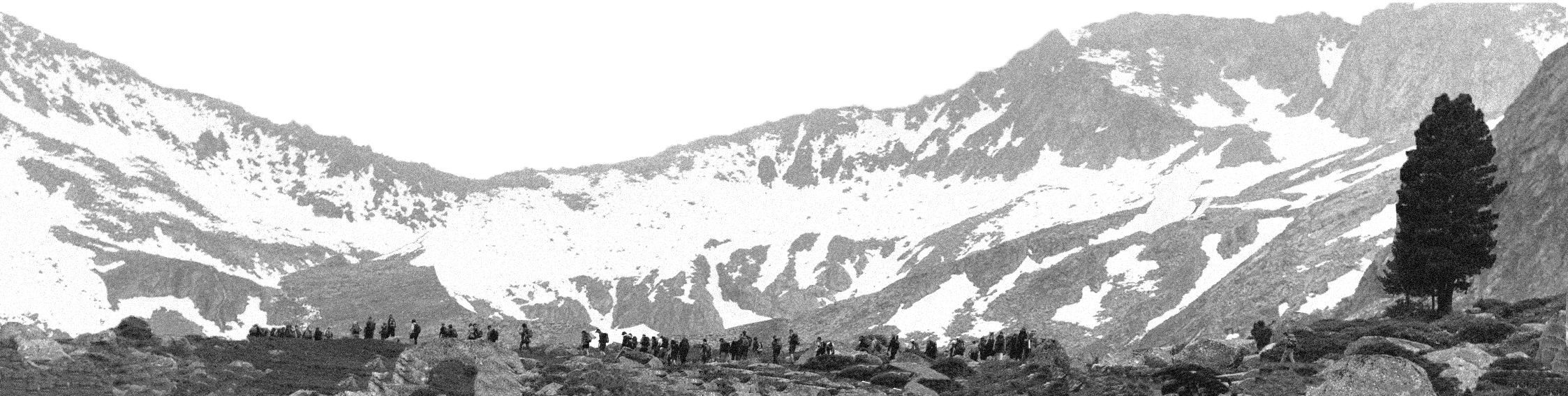
The first time that I ever attended the APC event was in 2011 with my Father, Step mother, and step brother. It can best be described as a trip to attend the crossing that included visiting a few places in Europe as a family together. Overshadowing all of the gravity of the APC, which was then very much in a different place than it is today, was this trip being my first time leaving the United States. That experience in itself at the time, for good or bad, is what occupied most of my mind at that time.
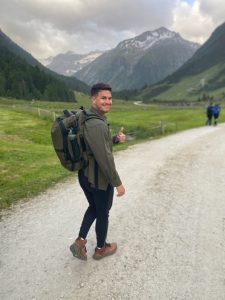
At 16 years old, most of my knowledge of the holocaust and plight of victims of Nazi persecution came from a few short family conversations and what I learned in school. In most cases the survivors of these events either carried the experiences daily and were quite open with their experiences or they kept these memories — if you can call them that — tucked away. Suffice to say in my family the latter was the case. Some of that may be due to my Grandmother’s passing when I was only 13 — much of these types of conversations are not ones for a 13 year old — but from everything I have heard from those who knew her tells me that this lack of conversation on the topic is not unique to me.
My memories of my grandmother fall into a few categories: hugs, kisses, and cooking bountiful amounts of food. After learning more about her experience in life, I have not yet figured out how someone who went through one of the worst experiences in modern human history was able to become the bubbly savta that I knew. This type of attitude carries through generations and it makes sense that the first time anyone in our immediate family knew of my grandparents‘ time in Givat Avoda was only due to a radio advertisement broadcasted in Israel calling for stories of people who spent time there to tell their stories. Without those requests for information, put together by the late Ernst Loeschner, my family and likely many others would have no idea about the exodus of so many Jews from the Pinzgau and the unique stories all of the survivors bring.
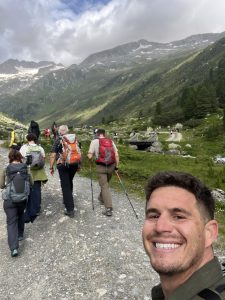
I must admit that the first time I did the crossing the weight of why everyone was there was not as much on my mind — I blame that mostly on being a 16 year old American who was first seeing the Alps and still in shock from having to pay to use a public restroom. The stories of survivors, their families, and what we were all doing there was not yet filling the quiet spaces in the town of Krimml like it does today. However, with time and experience the APC has certainly taken a different form — as an organization and as an event for my family (and many others). In 2025, I arrive and the entrance to the ceremony has photos of Saalfelden in 1947 that include my grandparents. I think if that was the case in 2011 things would have been different for me — but this experience speaks to how I view my grandparents‘ experience as well as the progression of APC as an organization.
Every time that I have done the crossing I try to picture what it was like for those people doing it out of necessity and survival — it is virtually impossible to truly put myself in that headspace but each time I do my best. We are all there looking at the same mountains and rivers but we are looking through a completely different lens. I hear stories of people trekking babies and doing the crossing without proper gear but during the crossing I am caught up in the breathtaking views and the endless interesting stories from people about who they are and how they ended up here.
I like to think that my attendance is, of course, a commemoration and recognition of the struggles those people endured and that if people of my own family did it under such conditions then what am I capable of accomplishing? It is quite difficult to commemorate the experiences of people who, in many cases, were not asking for or looking for commemoration. They were looking to survive and build a new life after surviving the horrors of Nazi persecution.
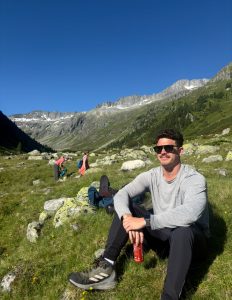
In reality, I can understand that many of those who lived through these experiences wanted to spend the least amount of time possible ever thinking about it again. Then, one day decades later someone from a place that represents the worst time in your life calls you and asks you to hear your story. I am thankful for the people who spent so much time, effort, and money to collect these stories and I am also thankful for the survivors who were willing to share theirs. I will continue to attend the crossing every year that I can and I will continue to use it as a reminder of my family’s struggles and a recognition of how that suffering manifested in a group of people who gather every year to talk about the past and how it can never be repeated again.